

EMEA CHRIE
September 14, 2026
Emotional Intelligence & Tourism Social Entrepreneurship
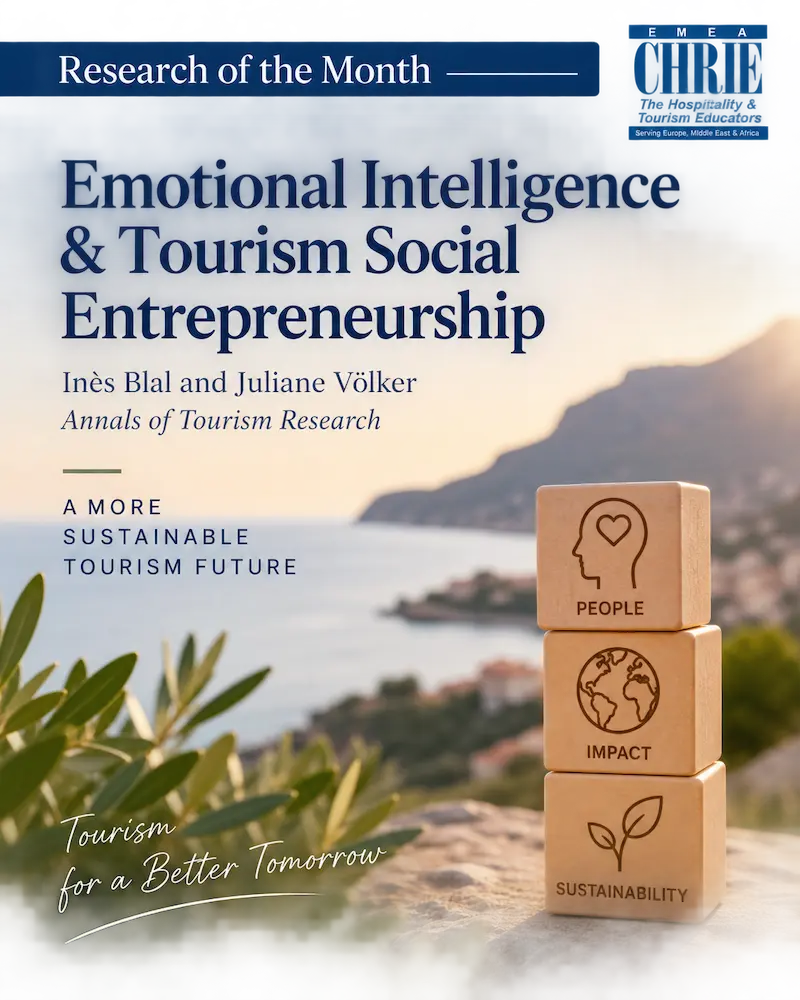
We are delighted to announce EMEA‑CHRIE’s Research of the Month: “Emotional Intelligence & Tourism Social Entrepreneurship” by Inès Blal and Juliane Völker, published in the Annals of Tourism Research. https://doi.org/10.1016/j.annals.2025.104078
What does emotional intelligence have to do with creating social impact in tourism?
For tourism entrepreneurs and hospitality leaders, balancing commercial performance with community needs is rarely straightforward. They must engage with guests, employees, local communities, funders, and public authorities—often with different, and sometimes competing, expectations.
Blal and Völker highlight emotional intelligence as an essential but often overlooked leadership capability for navigating these tensions. It is not simply about being empathetic or “good with people.” It involves recognising emotions, understanding their implications, and responding constructively during difficult decisions, negotiations, and stakeholder conflicts.
The article follows the social entrepreneurial journey through three stages: intend, sustain, and succeed.
• Trait emotional intelligence—including empathy, optimism, and sociability—can shape an entrepreneur’s intention to pursue a social mission.
• Ability emotional intelligence—the capacity to perceive, understand, and regulate emotions—helps leaders sustain relationships with diverse stakeholders.
• Mixed emotional intelligence is reflected in practical competencies, such as collaboration and adaptability, that help transform a social mission into lasting social value.
Together, these capabilities can support better decision-making in uncertain situations, constructive stakeholder negotiations, and the resilience needed to sustain a social enterprise over time.
A strong mission alone is not enough to sustain social impact. Tourism ventures also need leaders who can listen to different voices, manage tensions between financial viability and social purpose, and build the trust needed for long-term collaboration.
Emotional intelligence is therefore not a “soft” extra. It is a practical leadership capability that can help tourism organisations build stronger partnerships, make better decisions, and create lasting value.
EMEA CHRIE
September 14, 2026
Last updated on September 15, 2026